




Off-Grid solar EV charging: what size PV, battery, and backup generator do you need
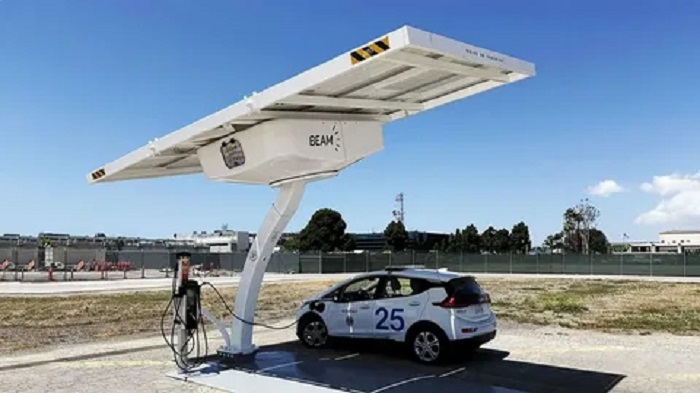
Off-grid EV charging sounds clean and simple: panels, battery, charger, done. The reality is more demanding. An EV is a large, mobile battery that can swallow a small off-grid system’s daily production if the design is based on optimism instead of math.
An off-grid solar EV charging system has to serve three jobs at once. The PV array produces energy. The stationary battery stores it and stabilizes output. A backup generator, if included, covers bad weather, seasonal dips, or heavy charging days.
Start With the Vehicle’s Energy Need
The daily driving target drives everything. A site charging a farm truck for short local trips needs a different system from a remote lodge supporting guest EVs. The charging plan should estimate daily kilowatt-hours, not just charger power.
A high-power charger is not useful if the battery and PV system cannot support it. The charger rating describes how fast energy can move into the vehicle. The PV and storage design determines whether that speed is sustainable.
The U.S. Department of Energy’s AFDC notes that battery energy storage can support EV fast charging in areas with limited grid capacity, but it also warns that batteries can be depleted if undersized. In off-grid design, that warning matters even more because there may be no grid to fall back on.
PV Size Is Seasonal
A solar array that looks generous in July may disappoint in December. Off-grid charging should be modeled with local weather, tilt, shading, and seasonal sunlight. NREL’s PVWatts calculator is commonly used to estimate solar production by location and system design, which helps prevent summer-only thinking.
The PV array should cover normal site loads, expected EV charging, battery recharge losses, and a margin for poor weather. If the EV must be ready every morning, the battery and generator plan becomes more important than the peak solar number on a sunny afternoon.
Why the Backup Generator Still Shows Up
A generator in a solar-storage system is not a failure of clean energy planning. It can be a resilience tool. A hybrid system may run mostly on solar and battery storage, while the generator handles long cloudy stretches, emergency demand, or maintenance windows.
That is where PV-storage-diesel architecture becomes relevant. ESYsunhome lists ES130-261 as a 130 kW, 261 kWh PV-storage-diesel hybrid system intended for applications above 100 kW, including hotels, factories, apartments, and power stations. For larger off-grid or weak-grid charging sites, readers can see the product range to understand how hybrid ESS options are organized.
Sizing Questions Before Equipment
A serious off-grid charging plan should answer a few questions before choosing hardware:
- How many EVs charge per day, and how many kilowatt-hours does each need?
- What non-EV loads must the site support at the same time?
- How many low-solar days should the system survive?
- Is the generator for emergency use only or regular seasonal support?
The goal is not to build the largest system possible. It is to build one that matches duty cycle, climate, and risk tolerance. Off-grid solar EV charging can work well, but only when the EV is treated as a major load, not an accessory plugged into leftover sunshine.
Hello!! My name is Jeanine
I love to eat, travel, and eat some more! I am married to the man of my dreams and have a beautiful little girl whose smiles can brighten anyone’s day!